
Guide one
Fermentation
Fermentation is the oldest biotechnology there is. Long before anyone had seen a microbe, people were using yeasts and bacteria to raise bread, brew drinks, sour milk and keep vegetables through the dry season.
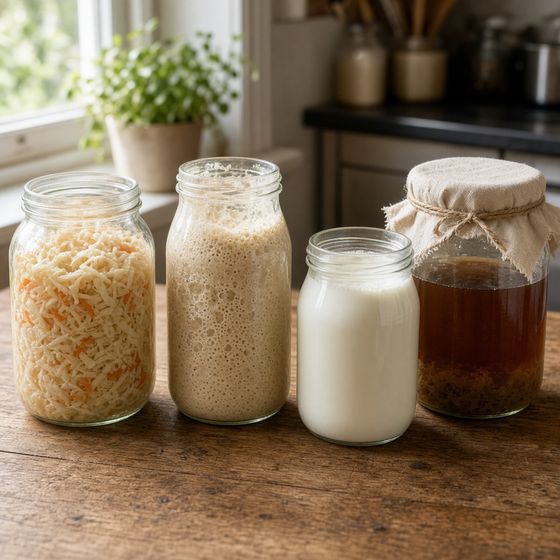
What is actually happening
Microbes need energy. When yeasts and certain bacteria break down sugars without much oxygen, they leave by-products behind. Those by-products are what we taste and use: carbon dioxide that lifts dough, alcohol in beer and wine, lactic acid that sours yoghurt and pickles, and acetic acid in vinegar.
| Main by-product | Usual microbe | Everyday examples |
|---|---|---|
| Carbon dioxide and alcohol | Yeasts such as Saccharomyces cerevisiae | Bread, beer, wine, sorghum and maize brews |
| Lactic acid | Lactic acid bacteria | Yoghurt, sour milk, sauerkraut, kimchi, sour porridges |
| Acetic acid | Acetobacter and relatives | Vinegar, kombucha |
| Flavour and texture changes | Moulds such as Aspergillus and Rhizopus | Soy sauce, miso, tempeh |
Fermentation around the table
Almost every food culture has a fermented staple. Across southern and eastern Africa there are sour maize and sorghum drinks and porridges. In Europe there are sourdough, cheeses and sauerkraut. East Asia has soy sauce, miso and kimchi, and South Asia has idli and dosa batters. The microbes differ, but the idea is the same: let tiny organisms change food in useful ways.
From the kitchen to the factory
Modern industry uses the same process at a much larger scale and with far tighter control. Large stainless-steel vessels, called fermenters or bioreactors, keep temperature, oxygen and acidity steady while carefully chosen microbes make products such as citric acid for drinks, enzymes for washing powders and many ingredients used in food.
Home fermenting is a craft with its own safety rules. Follow a trusted, tested recipe, use clean equipment and throw away anything that smells or looks wrong. This page explains the science and is not a recipe or food-safety guide.
Why sour food keeps
As lactic acid bacteria multiply, they lower the acidity of the food. Many spoilage organisms grow poorly in acid, salt or alcohol, which is one reason fermented foods were such an important way to store harvests before refrigeration.